
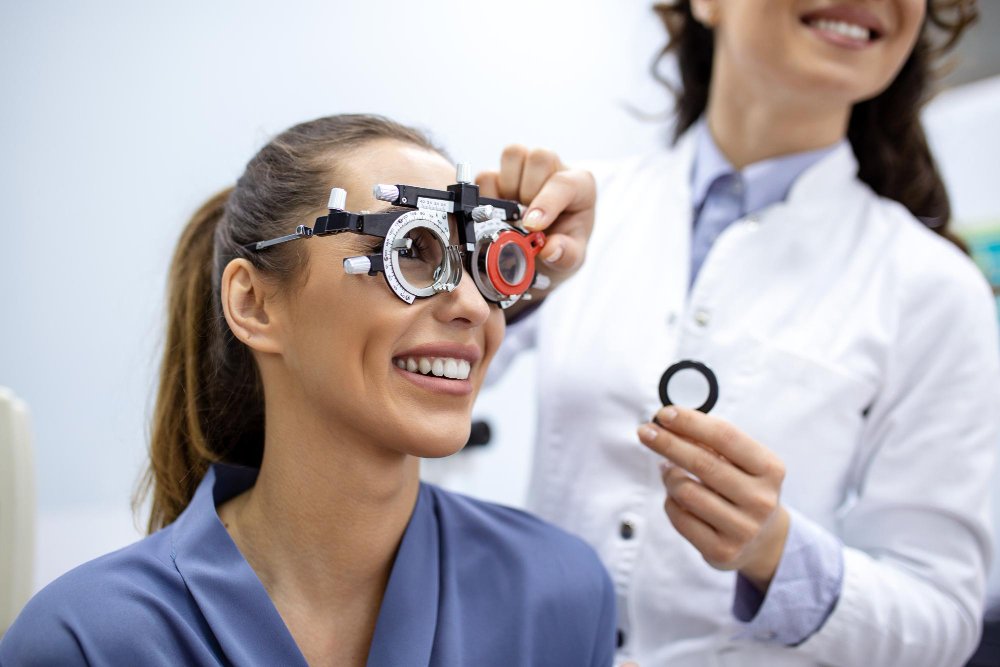
Clear vision depends on more than a single appointment, and understanding eye exam vs. contact lens fitting helps patients make informed decisions about their care. While both processes evaluate vision, they serve different purposes and involve distinct steps.
A standard eye exam focuses on visual clarity and eye health, while a contact lens fitting addresses how lenses interact with the surface of the eye.
Knowing these differences can help avoid unnecessary appointments, reduce confusion, and lead to better comfort and accuracy in everyday vision correction.
Purpose: Vision Assessment Versus Lens Compatibility
An eye exam evaluates how clearly a person sees and checks the overall condition of the eyes. It identifies refractive errors and detects early signs of eye conditions such as Glaucoma or Cataracts.
A contact lens fitting, on the other hand, focuses on how a lens sits on the eye. It examines the size, shape, and curvature of the cornea to determine which type of lens will function properly and feel comfortable throughout the day.
Scope of Testing
Comprehensive eye exams include multiple tests that assess both vision and internal eye health. These tests may involve visual acuity checks, peripheral vision evaluation, and detailed examination of internal structures.
Contact lens fittings extend beyond these steps. They include additional measurements that focus specifically on how lenses interact with the eye. This added layer of testing makes the process more detailed for contact lens users.
Measurements Taken During Each Process
An eye exam measures how well the eyes focus light and determines the correct prescription for glasses. It identifies conditions such as nearsightedness, farsightedness, or astigmatism.
A contact lens fitting includes corneal measurements that determine the curvature of the eye. It also measures pupil and iris size to select lenses that align correctly. These measurements are necessary because contact lenses rest directly on the eye rather than sitting in front of it like glasses.
Evaluation of Tear Film and Eye Surface
A standard eye exam may observe general eye health, but it does not always focus deeply on tear film stability.
During a contact lens fitting, the tear film becomes a central focus. The optometrist evaluates moisture levels and surface conditions to determine if the eyes can tolerate contact lenses. Dryness or irritation can affect comfort, which makes this step particularly important.
Prescription Differences
Eyeglass prescriptions and contact lens prescriptions are not interchangeable. An eye exam results in a prescription designed for lenses positioned slightly away from the eyes.
A contact lens prescription includes additional details such as base curve and diameter. These measurements reflect the physical shape of the lens required for proper fit and function.
Trial and Adjustment Process
After an eye exam, patients can typically move forward with ordering prescription glasses without further testing.
A contact lens fitting often involves a trial phase. Patients may try different lens types to find the most comfortable option. The optometrist observes how the lenses sit on the eye and how vision responds during wear.
Time Required for Each Appointment
A routine eye exam follows a well-structured process that focuses on evaluating vision clarity and overall eye health within a defined timeframe. The appointment typically includes visual acuity testing, refraction, and an internal eye evaluation, which allows licensed optometrists to assess both function and structure efficiently.
A contact lens fitting requires more time because it involves additional steps beyond the standard exam. Measurements of the cornea, pupil, and tear film are necessary to determine the correct lens type. Patients may also try different lenses during the visit, and follow-up appointments are often scheduled to confirm comfort, fit, and consistent visual performance.
Cost Considerations
The cost of a standard eye exam generally reflects a complete evaluation of vision and eye health, including prescription assessment and screening for common conditions. This type of exam focuses on identifying refractive errors and monitoring long-term changes, which makes it a foundational part of routine care.
Contact lens fittings tend to involve higher costs due to the added level of detail required. Extra testing, precise measurements, and trial fittings contribute to the overall expense. Follow-up visits may also be included to refine the fit and address any discomfort. The added complexity of fitting lenses directly on the eye explains the difference in pricing between the two services.
Frequency of Exams and Renewals
Eye exam schedules vary based on age and health factors, but prescriptions for glasses may remain valid for a longer period.
Contact lens prescriptions often require more frequent updates. Regular evaluations help confirm that the lenses continue to fit properly and do not cause discomfort or complications.
Health Considerations for Contact Lens Wear
Eye exams identify underlying health conditions and monitor long-term changes in vision.
Contact lens fittings take these findings further by assessing how those conditions may affect lens wear. For example, individuals with dry eye or sensitivity may need specific lens types or alternative solutions.
Role in Long-Term Vision Care
Both eye exams and contact lens fittings play important roles in maintaining clear vision. One focuses on diagnosing and tracking changes, while the other focuses on applying that information to a specific form of correction.
Together, they create a complete approach to vision care that balances clarity, comfort, and long-term eye health.
Why Understanding the Difference Matters
Confusion between these two services can lead to incomplete care. Some patients assume a standard eye exam covers everything needed for contact lenses, which is not the case.
Knowing the distinction allows patients to plan appointments more effectively and avoid delays. It also helps set realistic expectations about time, cost, and outcomes.
Clear communication with an optometrist allows both services to be combined when needed, creating a more efficient and streamlined experience.
How Clear Sight Optical Guides Your Eye Care Experience
At Clear Sight Optical, we take a detailed approach to both comprehensive eye exams and contact lenses & fittings. Our licensed optometrists evaluate vision, eye health, and lens compatibility to help you move forward with clarity and comfort. From prescription eyewear to specialized fittings, we guide each step with attention to how your eyes function in daily life, helping you choose the option that fits you best.
Get the clarity and comfort your eyes deserve. Schedule your comprehensive eye exam and contact lens fitting with Clear Sight Optical today and take the next step toward better vision.