
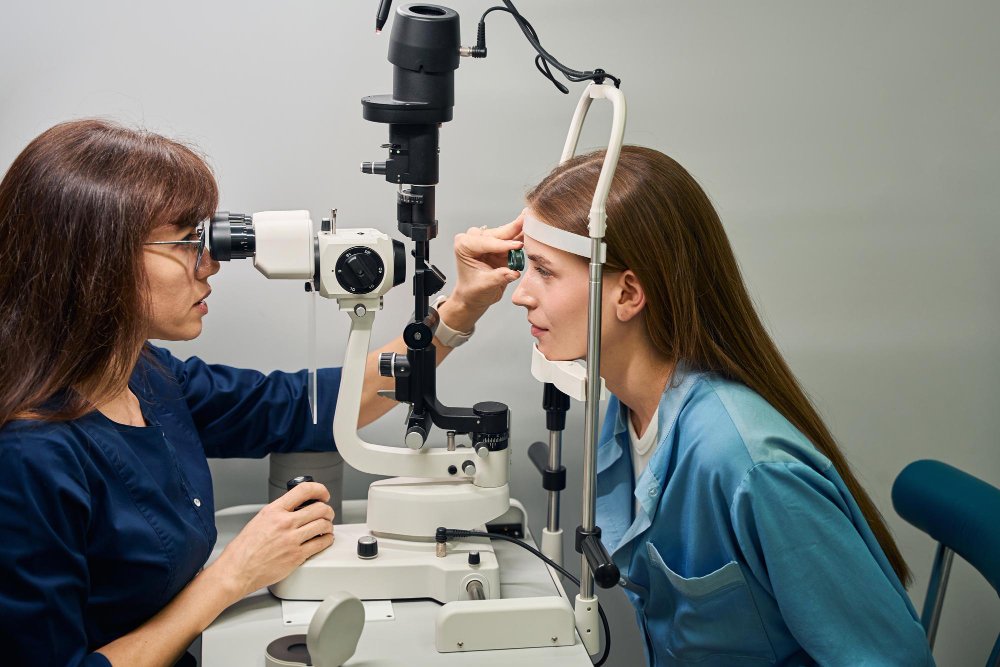
A dilated eye exam allows your eye doctor to examine parts of the eye that remain hidden during a standard check. By widening the pupil, this process gives a clear view of the retina, optic nerve, and blood vessels. The value of a dilated eye exam goes beyond vision correction, as it helps identify early signs of disease that may not show symptoms.
Understanding how this exam works can help you make informed decisions about long-term eye care and protect your overall health.
What is a Dilated Eye Exam
A dilated eye exam involves placing special drops into the eyes to temporarily enlarge the pupils. Under normal conditions, the pupil reacts to light by becoming smaller, which limits how much of the inner eye your doctor can see. Once the pupil expands, more light enters, allowing a detailed view of internal structures.
This expanded view helps your eye doctor examine the retina, optic nerve, and blood vessels with greater clarity. These areas hold important information about both vision and general health. Without dilation, the examination remains limited, similar to viewing a room through a narrow opening instead of a wide doorway.
The effects of dilation can last for several hours, during which vision may appear blurry and sensitivity to light may increase. Although temporary, this stage plays a meaningful role in a thorough eye evaluation.
Why a Dilated Eye Exam Matters for Your Health
A dilated eye exam does more than assess eyesight. It allows your eye doctor to detect changes in the eye that may signal larger health concerns. The back of the eye contains blood vessels that reflect what happens throughout the body.
Through this exam, early signs of conditions such as high blood pressure or diabetes may appear before other symptoms develop. This makes eye care a valuable part of preventive health.
Another important aspect involves identifying eye diseases that develop quietly. Many conditions progress without noticeable discomfort or vision changes in early stages. A dilated exam allows these issues to be detected before they affect daily life.
Early detection often leads to better outcomes. It gives you more time to respond to changes and manage your eye health effectively.
Conditions a Dilated Eye Exam Can Detect
A clear view of the inner eye allows your doctor to identify a range of conditions that may otherwise go unnoticed. Several eye diseases begin without visible symptoms, which makes detailed examination important.
Glaucoma affects the optic nerve and can lead to vision loss if not addressed early. A dilated view helps your doctor assess nerve health more accurately.
Diabetic eye disease affects blood vessels in the retina. This condition can develop even when vision appears stable. A closer look during dilation helps detect early changes.
Macular degeneration impacts central vision over time. Identifying early signs allows for timely management.
Cataracts, which involve clouding of the eye’s lens, can also be evaluated more thoroughly with dilation, especially in later stages.
Each of these conditions benefits from early identification, which can influence long-term outcomes.
What to Expect During the Appointment
A dilated eye exam follows a straightforward process. Your doctor begins with a standard evaluation, which may include vision testing and a review of your medical history. Once these steps are complete, dilating drops are applied.
It usually takes about fifteen to thirty minutes for the pupils to fully expand. During this time, your doctor may prepare for the next phase of the exam. After dilation, specialized tools and light allow a detailed inspection of the inner eye.
You may notice blurred vision, especially when focusing on close objects. Light sensitivity is also common, as more light enters the eye through the enlarged pupil. These effects gradually fade over several hours.
Planning ahead can make the experience more comfortable. Bringing sunglasses and arranging transportation can help, especially if your vision feels affected after the visit.
Do You Need Dilation at Every Visit
Not every appointment includes dilation. The frequency depends on your eye health, age, and medical history. For individuals with stable eye health and no risk factors, dilation may take place every other visit.
However, certain conditions call for more frequent exams. People with diabetes or high blood pressure often require regular dilated evaluations. A baseline exam around age forty also helps track changes over time.
Your eye doctor will recommend a schedule based on your specific needs. Regular communication during appointments helps determine the right approach for ongoing care.
How Dilated Exams Compare to Standard Eye Exams
A standard eye exam focuses on visual clarity, prescription updates, and basic eye health checks. While this type of exam covers many aspects of vision, it does not always allow a complete view of the retina and optic nerve.
A dilated eye exam expands the scope of evaluation. It adds depth to the assessment by revealing areas that remain hidden without pupil enlargement. This difference plays a significant role in detecting conditions that develop silently.
Both types of exams serve important purposes. When combined, they create a more complete understanding of your eye health.
Who Benefits Most from a Dilated Eye Exam
Although everyone can gain insight from a dilated exam, certain groups benefit more due to higher risk factors. Adults over forty often experience natural changes in vision and eye structure, making regular evaluations valuable.
Individuals with a family history of eye disease may also require closer monitoring. Genetic factors can influence the likelihood of developing conditions such as glaucoma or macular degeneration.
Children may need dilation in specific cases, especially when accurate prescription measurements are required. The drops help relax focusing muscles, allowing a more precise evaluation.
Anyone experiencing sudden vision changes, flashes of light, or floaters should seek immediate attention, as these symptoms may indicate underlying issues that require prompt examination.
How Clear Sight Optical Approaches Dilated Eye Exams
At Clear Sight Optical, we take a thoughtful approach to every dilated eye exam. Our licensed optometrists focus on detailed evaluations that go beyond routine vision checks. We look closely at the structures that reveal early changes and guide you through each step so you feel comfortable and informed.
From comprehensive eye exams to prescription eyewear, contact lenses, and eye disease management, we handle your care with attention and clarity.
Schedule your visit today and take a proactive step toward better vision.